Recollections of a Pioneer in Australia
 George Whiting Crommelin
(1845-1905)
George Whiting Crommelin
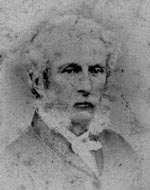
(1845-1905) Born 20 August 1845 Finchley House, London [7 Grove End Road, St. John's Wood, London] His birth is registered at St. John's Church, Marylebone, Middlesex. Died 7 May 1905 in NSW Australia Married 12 August 1880 Bega, New South Wales Frances Emily Dawson, daughter of William Leonard Dawson and Ann Cecilia Harnett Born 9 November 1855, Cooma Died 22 July 1940, Roseville |
|
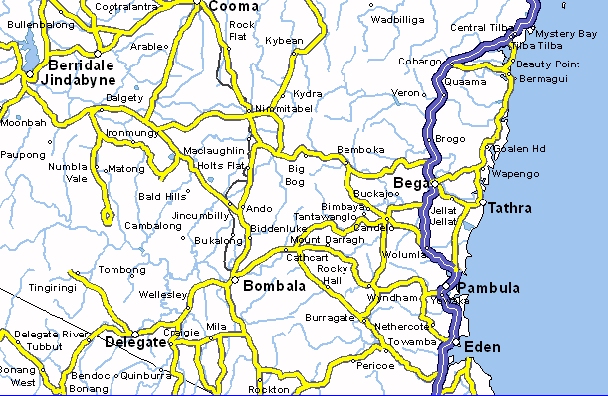

Part 1: After lodging in Sydney for some time, we three boys were put to school at the Rev. Barker's, Balmain, and our father went to Braidwood to try his luck on the goldfields at Bell's Paddock near Araluen. [Also known as the "Valley of Peace", Araluen was abruptly transformed in 1851 when gold was discovered by Alexander Waddell. Over £11 million worth of gold was found here and it was known as the richest alluvial goldfield in Australia. Records from between 1858 and 1860 quote 1,000 ounces of gold per fortnight being taken by the gold escort to Goulburn for railing to Sydney.] Some of our school chums are now leading citizens - the three Fitzhardings, two Mills, two Todhunters, Wilshire, Hunt, Hayes and Frazer. When I left school, Essington King Esq. took charge of me to Braidwood. He was on his wedding tour and travelling in those days was an undertaking - the roads were terrible. [The "wedding tour" must have taken place some time after the marriage. Essington King (1821-1910) son of Rear-Admiral Philip Parker King, R.N. of "Gidleigh", Bungendore, married on 27 April 1854 Christiana Riley of "Raby", Narellan.]  Braidwood, NSW Our first stage was to Denham Court (thirty miles), the property of Colonel Blomfield, a retired officer. Denham Court was a grand building. We arrived in Braidwood with the same pair of horses. The other stations for stages were Duntroon and Arnprior. [To travel to Braidwood through Duntroon (Canberra) was circuitous. Presumably Mr. and Mrs. King were making a call on the Campbell family there. Arnprior ("Aunt Prior") was the station of the Ryrie family, a few miles from Braidwood.] 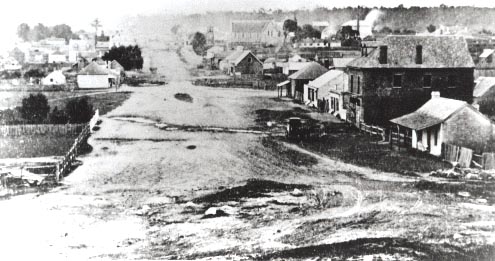
Braidwood in 1870 and 1985 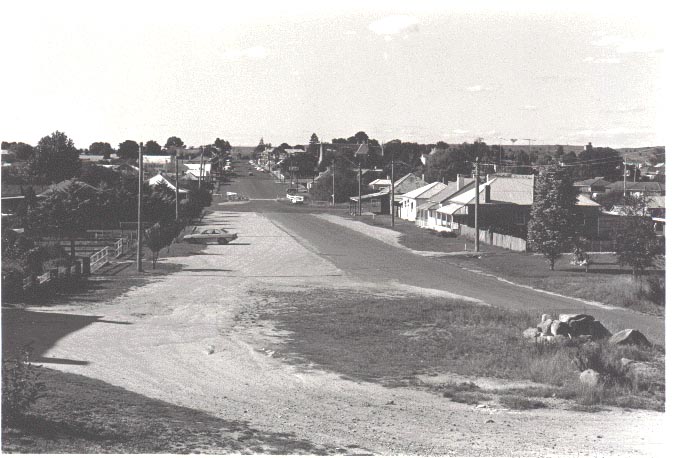
Father had rented a house from Mr. Larmer, a surveyor well known in Braidwood. The house was opposite a hotel named after the proprietor, "Farmer's Hotel". He had a renowned cockatoo that could say anything. Mr. Farmer even took it to England and back. The other hotel called "The Doncaster" was kept by Andrew Badgery. It was considered one of the best in the Colony. 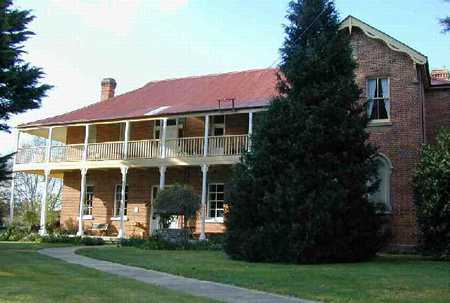 "Doncaster Inn", Braidwood On my tenth birthday I was put onto Father's old roan carthorse called "Roney" to go six miles to Exeter Farm - Mr. Tom Roberts' place - along with Father and Uncle Henry (Doctor) Crommelin, surgeon on the "India Ann". (He had retired and was only on a trip.) Well, they put me on the horse and away I went, quite confident of myself. After I had gone a few miles I put the horse alongside a stump to get off to shorten the stirrups. Then I got on again and rode further. About the time that we should have arrived, I came to a lot of houses which didn't look familiar - I had no idea where we were. Well, to my surprise the old horse trotting along quite briskly had taken us right back to my father's place! Then I heard father say, "Hello, Georgie, where have you taken us?" Then he laughed, making me so angry that I cried. But kind Uncle Henry harnessed up the horse and drove me to Exeter Farm so I wouldn't be disappointed. This was always a standing joke between us. I spent many happy days there. My great friend was Miss Maria Roberts. I used to call her to give me a leg up. Afterwards she became Mrs. Dransfield. 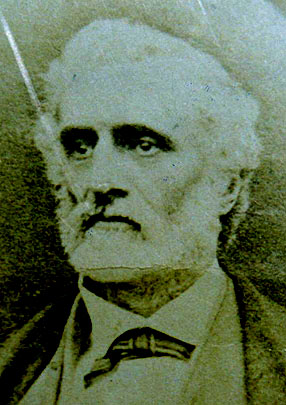
Uncle Henry Blyth Crommelin (1808-1883) At 14 years of age I was engaged at 2 pounds/10 shillings per week by Mr. Massey and Mr. J. Wear to help them drove cattle. On the road we bought 119 mixed head of cattle, cows and bullocks from Capt. Young of Yabtree Station, Murrumbidgee. Prices for Cows then were 5 pounds/5 shillings and for Bullocks 7 pounds. We made a very good trip, losing no cattle although the weather was very hot. We sold the bullocks for 9 pounds/7 shillings/6 pence and cows for 7 pounds. In those days we had to swim ourselves and everything across the Murrumbidgee River. My employers were so pleased with me that they made me a present of a new saddle and bridle together with the horse I rode. Afterwards I stayed some time on my Father's own farm, Farringdon - a beautiful farm on the Shoalhaven River adjoining the Mount Elrington estate managed by Mr. Thomas Stewart - a very old identity of Braidwood. On the farm I did a good deal of riding, horse breaking and milking. My brothers and I did all the farm work and I also did a lot of riding for Mr. T. Stewart in the Molonglo ranges mustering wild cattle. I did a great deal of wild bull shooting in conjuction with Messrs. G., Fred, and Frank Bell of Bendora. The Bells were splendid horsemen. They started a party one evening - George Bell, Fred Bell, Jack Wallace, James Crommelin, Mr. Ross, Jackey (a black boy) and myself. We took a pack horse and arrived at a camping place amidst the mountains at 10 o'clock. We boiled the billy, had a good supper and a jolly party (after we had hobbled the horses very closely), singing songs, etc. At daylight we started in search of wild cattle. Jackey found our saddle horses very near and brought them in safe to camp. It was a lovely morning and in about an hour's time we saw fresh cattle tracks. Jackey said they were not far away so we divided the party so as to get on each side. The country was very rough and dangerous and we had not gone far when we came on seven or eight head of cows with calves and an enormous brindle bull. We tried to keep the cattle together but could not, so all made after the bull.  There were only two revolvers amongst us. After a couple of miles of hard riding, Mr. Ross came close to it and put two shots through the beast. I was riding a black piebald horse. The bull seemed wounded and steadied itself. Not being able to pull my horse in, I galloped past the bull into the creek after passing close enough to almost touch the wounded animal. Then I pulled up and the bull made straight for me. My horse couldn't move while the enraged bull came at us furiously, putting its horns under my horse's flank and lifting us straight up. The frightened horse then galloped away a little. As I reined him in, Jack Wallace put two more bullets into the beast, killing it about 11 a.m. We found a few more cattle - added two cows - then we tailed the mob and took them home. We had great fun. One cow would not go in the yard but went into the house instead through the passage, scaring all the ladies. After a little trouble we yarded, branded and ear-marked her. After that I went to the Honourable Hugh Wallace (Jack Wallace's father) of Nithsdale, sixteen miles from Braidwood. I was there about twelve months as a jackaroo, then went to Wagga Wagga. The Wallaces bought a large station three miles from Wagga called 'Eunonyhareena', and here I was also a jackaroo for over twelve months. (You know a jackaroo is a gentleman's position). It was a splendid station carrying 52,000 sheep as well as a few cattle and horses. While there I rode my first public race, a hackney race over a mile and a half on Hector, a horse belonging to Harry Wallace. I wasn't the least bit nervous and won the race by three lengths. Eleven horses started. Peter Macalister, a sporting man, complimented me on my judgement. At that time Wagga was renowned for the bushranger Morgan, the terror of the country. Mr. Baylis, Police Magistrate, was partly responsible for Morgan's capture. Mr. Baylis and a Police Sergeant were camping and foolishly lit a fire near to Mr. Flood's station not far from Wagga Wagga. Suddenly two shots were fired and Mr. Baylis was wounded in the hand. Later he had to have his thumb amputated. He was greatly praised for his bravery in going after Morgan.  [Henry Baylis, Police Magistrate at Wagga since 1858, was attacked by Morgan and Clarke on 21 August 1863, but the shots missed him. After being chased 4.5 miles he surrendered and was robbed of his papers, purse and horse. A few days later, when out with a police posse hunting the same outlaws, he was shot, but survived. On 24 July 1864 the bushranger 'Mad Dog' Morgan shot Sergeant David Maginnity near the Tumbarumba goldfields. The incident occurred on the road between Tumbarumba and Coppabella. Morgan simply approached two policemen and shot one of them. The other, Trooper Churchley fled and was later dismissed for cowardice although he insisted his horse bolted when the shot rang out. The event was widely reported in Sydney and did much to establish Morgan as Public Enemy No. 1. After the killing the government put a reward of £1000 on Morgan's head.] Some of the Wagga people who visited Eunonyhareena were Jack Bull (son of Capt. Bull of Sydney), Mr. Murray (Postmaster), Mr. Hammond (owner of Junee station), Mr. Windeyer (owner of Wantabadgery station), and Mr. F.G. Thompson, a large storekeeper.  From there I went back to Farringdon which was being managed by Tom Crommelin, as my Father had taken Mr. Cooper's place at Araluen as Police Magistrate. Araluen was then one of the largest goldfields in the colony. With forty-seven public houses it was a very rowdy place. Later I went and lived there with my father and bought a share in a claim called "Nil Desperandum" ('Never Despair'). I worked my own share for about four months to save expenses of 2 pounds/10 shillings per week. It was very hard work, of course, but it was a good claim and I made about 5 pounds per week. After four months I sold out. I had given 25 pounds for it and sold it for 70 pounds. Then I went to Nithsdale again to help Mr. Wallace doing anything and everything. At that time bushranging broke out. The Clarkes (Tommy and Johnny), Pat and Tom Connell and Steve Hart were all men whom I knew well, as well as neighbouring Selectors. Mr. Wallace then held a large station called 'Bolaro' about forty miles from Nithsdale. He had two reliable stockmen, Bolaro Dick and Jack Bond. Jack Bond was married to a half-caste - she was a good housekeeper and used to grind the wheat and make the most delicious brown bread. It was a very wild place - one of the roughest places in the colony. Here there is a creek which you cross twenty-seven times in three miles. It curls backwards and forwards like a serpent. The book, "Robbery Under Arms" is set in this country and these are the people that it speaks of. 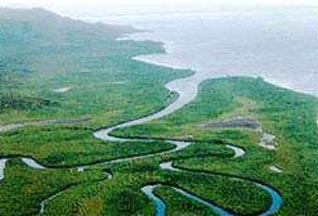 [In 1862, the bushranger, Ben Hall, and his gang made an unsuccessful attempt to hold up the gold escort on the Majors Creek Mountain. Shortly after, the Clarke Gang began a series of holdups in the area. Led by Thomas Clarke, the son of a former convict, these bush-bred "wild colonial boys" eluded the police until 1867.] Messrs. Hassall and Roberts had a large station called 'Balalaby'. [Balalaby or 'Ballalaba' is a well-known property near Captain's Flat. A stream in this district is known as "Stony Creek".] In those days there were mustering and branding times when their cattle would get mixed with Bolaro cattle and the stockmen of both stations would meet to muster. Tommy Bungel was Mr. Hassall's stockman while Jimmy Burns (called 'Jimmy the Boy') was Mr. Wallace's stockman. Jack Wallace, Pat Connell, Tommy Clarke and Jackey, the black boy, used to go mustering with me to Stoney Creek which had a public house kept by William O'Connell. This was often the resting place. We always took a tailing mob to muster the wild ones in. This really helped. It was hard work and hard riding - wonderful riding in the dense scrub and the ranges. Often we were a week away, and when done we used to divide the wild cattle between the Stations. Soon after this the bushrangers became worse and I often joined the police in search of them. There was a police barracks at Nithsdale, Mr. Wallace having given one of his buildings for the purpose. Mr. Orridge was Superintendent of Police. I went from there to Monaro and then to Dangelong Station near Cooma as overseer for Mr. H. Wallace. There I broke in a number of horses and was storekeeper. All the young men (I was twenty or twenty-one at the time) used to have great boxing matches. One Sunday I was boxing a man named Dave Scarlett and in the midst and best of it, old Mr. Wallace popped in on us and put a stop to it. He gave us a great scolding. I had a very bad attack of rheumatic fever there and was attended by Dr. Davidson.  [David Scarlett (1838-1906) was a bricklayer, born in London, who settled in the Cooma district in December 1860. He married Eliza Try (1845-1933) on 22 September 1862. Descendents of their 17 children are still in the Monaro district. He died at his property, "Oakvale", Berridale, 2 July 1906.] After that I thought I'd like a trip to Gippsland, Victoria, so off I went to Rosebrook - Mr. Maurice Harnett's place. I bought some horses there and got some more from Frank Goodwin, a selector on Rosebrook. Goodwin helped me drive the horses as far as Tubbutt, Mr. Whittaker's station. Mr. Jamie Whittaker and black Joe helped me with the horses to Bairnsdale. There I sold my horses and came to Burnima - at that time Mr. W. Wallace's place near Bombala, and stayed there for a while helping out.  At that time I used to ride at the picnic races as well as the annual races. I was considered a reliable jockey and won a lot of prizes at picnic races, including a handsome silver salver which I presented to Mrs. W. Wallace. (It was the custom to give the prize to the ladies). A handsome amethyst gold brooch was presented to Miss Steel. A pair of bronze horses went to Mrs. Ned Nicholson, along with a beautiful cup. I rode a horse called 'Patch' for Mr. Henry Nicholson and numerous others. However, the thing I wanted to win most of all was a Bachelor's bag. Since I could not ride too light, a Bachelor's bag would carry everything - silver spurs, whips, stockwhips, dressing cases, braces, slipper razor, scissors, cotton, needles, walking stick, etc. - everything. 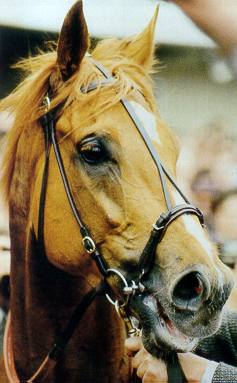 From Mr. Wallace's I went to Dundundera near Maharatta Estate, Bombala which belonged to Mr. Henry Nicholson. While there I broke in a lot of horses. One special horse Mr. Nicholson gave to me as a present - red mane and belly, white face and feet, three years old - a handsome beast. One day when it was being broken in, the horse was blindfolded. When Mr. Nicholson took off the blindfold, the horse looked around and saw me on its back. Then it bucked up onto a large pile of wood. Coming down off that, it bucked throughout the stable yard but did not fall or throw me, much to everyone's surprise. Mr. William Nicholson, a brother, came from Melbourne and took a great fancy to my horse. He offered 25 pounds and half of its future winnings, but I never saw the 25 pounds, nor did I ever get half the winnings though it ran several races. That taught me a lesson. I was at Dundundera a considerable time. With Mr. Langley (who was there as a bookkeeper), I took Patch to race at the Bega Annual races. Mr. William Coulter, also from Monaro, took his horse, Baron, which he got in Melbourne. Mr. Coulter badly wanted me to ride for him, but I would not do so in any race Patch was not running. Therefore we could not come to terms. Neither of our horses won, but Patch and Baron came second in their races. We had a jolly time. Patch was an an Arab horse bred by Henry Hall at Ginninderra near Yass. He was dappled grey with a peculiar patch on the thigh. He was admired immensely by all the ladies: "Oh, what a pretty horse!", etc., etc. His trainer's name was Coots. Coming back to Dundundera, I took a colt (a whalebone colt) to Braidwood, staying at Rosebrook one night and Anembo the next. Anembo was part of the Rosebrook run. Two of my dogs ate all of Mrs. Harnett's chickens which I was very upset about, but Mr. Harnett as usual made a great joke of it. I had not travelled through Anembo before - it is very rough country. Nightfall came on so I thought I had better make camp. I had no blankets or food, but took the saddle bags off, hobbled my horse with stirrup leather, made a nice fire by a log and sat down, planning so to pass the night. It was very cold and frosty, and soon became quite dark - the moon was not up.  Suddenly I heard the sound of horses coming at a good pace. Presently two horsemen came up to the fire and called, "Hallo, mate. Are you going to camp out here this cold night?" When they dismounted to warm their hands, I immediately recognized them - Pat Connell and Tom Clarke! A voice I knew only too well exclaimed, "Well I'll be damned - if it isn't Georgie Crommelin! Get your horse and baggage and come with us. You mustn't camp here all night." Turning to Tom, Pat said, "He won't rat on us, I'll wager." I said I certainly would not, and they took me to Hurley's hut. It was crammed with people having a jolly time - dancing, etc. There were two concertinas. They sang songs and had a really good supper with rum and water in a tin bucket and port wine for the ladies. This went on until late into the night. They made me a bed on the sofa while some men lay on the floor by the kitchen fire. There was an early breakfast at 7 a.m., then Clarke and Connell went by themselves into the Jingera Mountains. Wishing them all goodbye, I went on to Braidwood through Parker's Gap. When I got to Nithsdale, Mr. Wallace's station, the barracks was teeming with police who commenced to question me, "Which way had I come? Did I see anything of the bushrangers?" My only reply was, "Not likely!" and thereby put them off. At the time there was a great reward out for them. I stayed at Nithsdale some time and used often to go out with the police. I was there also on the occasion when Pat Connell was shot dead by "Boy" Kelly. He was a policeman. They called him "Boy" Kelly because he was only nineteen. Soon after that they were all brought in - the Clarkes and Barry, their uncle who supposedly had betrayed them. 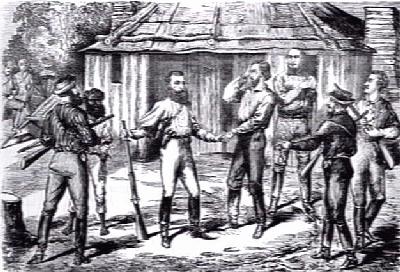 They were all handcuffed and led with a great procession following them through the street. Tom Clarke was wounded and Sir Watkin Wynn (black-tracker) had his arm shattered by a shot from Tommy Clarke. His arm was amputated in Braidwood hospital. I was there when the operation was performed by Dr. Patterson. Sir Watkin sent word early one morning to the doctor saying his arm was quite well and giving him no trouble. He said he was banging it about quite normally, so the doctor and I went up to see him. It was sad to see his poor face change when the doctor said it was in very bad condition and that it would have to come off. Furthermore it had to be done without chloroform because this would have no effect on black fellows. He withstood the operation like a man. He had one of his own countrymen with him. Afterwards he was pensioned at, I think, 2/6 per day. He was presented before the Governor, Sir Hercules Robinson, who had a coat made for him with stripes, etc. This pleased him. He was very proud of it and he used to say that he lost his arm for the cause of his country. After this I returned to Monaro, to Mrs. Hensleigh of Bendock near Delegate. Harry and Jack Hensleigh managed the station for their mother. I helped for a time, mustering cattle. Then the Gympie Goldfields on the Lady Mary River border, Queensland, broke out. Jack and I decided to go up there. We did up our swags in Sydney and went to Brisbane in the steamer, travelling steerage. From Brisbane we hired horses for part of the way and walked the remainder carrying our swags. We introduced ourselves at some of the stations along the way and received great kindness from them. When we finally got to Gympie we found it had swelled to 13,000 inhabitants. The shanty town spread about two miles on the bank of the Lady Mary River and was built in only a few months. All the houses were made of palings but there were also some tents. All night you could hear the clatter and hammering of carpenters, etc. It seemed as if the scum of the earth were there from all nations. There was one long narrow street - nothing but mud and gutters. "Cheap Johns at night" would be tipped into the gutters and then fighting would begin.  We put up at a paling-house hotel kept by a Mr. Fulford and his wife. We were in a room next to the bar and couldn't sleep because of all the noise and brawling that was going on. Some fighting louts then crashed our door down and tumbled onto our bed. After a few days we located a Gippsland friend, a broker, who put us onto a claim called the "Deep Lead". We joined together to form a party of seventeen and proceeded to peg out this claim. Some of them were from Victoria. Well, we worked the claim for six months, working night and day, and drove in two directions. When we finally had the prospect of a little gold, we nearly had a fatal accident. The Lady Mary River burst into our claim, spoiling all our hard work. It filled our claim with water and scared the living daylights out of us. Abandoning the claim, some returned home disheartened. Jack Hensleigh and I had very little money left. Then we showed specimens of gold to a tribe of blacks and King Bumpshaw. He said he knew where there was plenty of stuff like that so we made up a party of ten and went off into the bush with the blacks. We gave them a lot of rations and took along some for ourselves as well. We further promised them all sorts of good things if it was good gold. They took us about forty miles. It took four days to get there, travelling through the most beautiful country, always camping near little lagoons. They were the most shady and lovely places - almost dark in spots with the growth of souplejack. 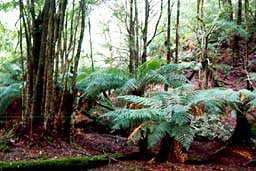 In all there were about thirty blacks. We ran short of rations and for the last few days we lived as they did - on fish, honey, yams and bush turkeys which they easily caught. They took us to what seemed a beautiful reef, but what they took to be gold turned out to be ordinary mullock - something which looked very much like gold. They were as much disappointed as we were. We returned disappointed, but I have never regretted the trip. We saw firsthand a great deal of the blacks' bush lore and much beautiful country. After resting a few days we returned to Sydney and then went on to Bendock. |