Recollections of a Pioneer in Australia
Part 4
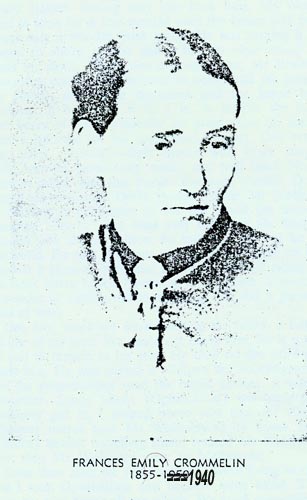 |
Continuation of the story of George Whiting Crommelin (1845-1905) by Frances Emily Crommelin-Dawson, daughter of William Leonard Dawson and Ann Cecilia Harnett Born 1855 Died 1940  |

Part 4: 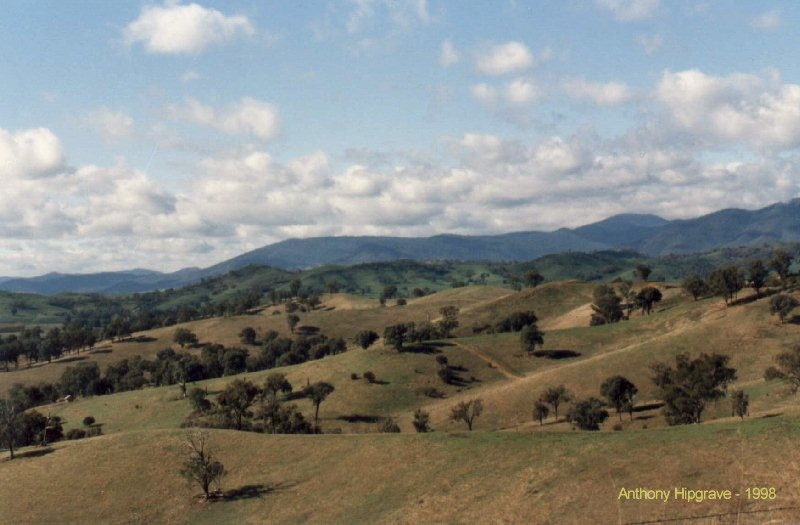
Bega district - Click to enlarge George Whiting Crommelin, then aged 34, married on 12 August 1880 in Bega at the Kameruka Trinity Church (then belonging to the Kameruka Estate, but now made over by the owner, Robert Lucas Tooth Esq., to the diocese of Goulburn). He married Frances Emily Dawson, aged 24, adopted niece of Mrs. Wren. Mr. Wren was then manager of the Kameruka Estate. We had a very nice, quiet wedding. W.W. Wren of Faraganda, eldest son of Mr. Wren, was very ill with rheumatic fever at the time. [The introduction of advanced cheese making processes at the Tooth family's Kameruka Estate was critical to the development of the industry in the valley. James Manning, manager of the Twofold Bay Pastoral Association, moved to 'Wanagabra' near Bega in 1864 after selling Kameruka. He was responsible for encouraging the German immigrants, whose ancestors now live in the Bega Valley, to work at the Kameruka estate. He introduced American cheese-making methods, commenced maize cultivation in the district, grew vineyards and, after pressing for the implementation of a telegraph line from Bega to Sydney, sent the first message in 1868.]  One of George's old chums, Mr. H. Hensleigh, was passing Kameruka with fat cattle for the Bega market so he was asked to join in the merry party. He came out, all apologies for his travelling clothes, etc., but all the same he enjoyed the breakfast and toasts. The church was nicely decorated, although it was the depth of winter, white camellias and maiden hair fern being very abundant. The bridesmaids' caps were of maiden hair fern with white camellias, and one could hardly think they would be so pretty. The presents were very nice and good. 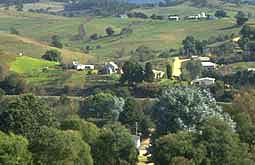 My husband gave me a nice little buggy and horse, "Price", a fast trotter which got sick six weeks afterwards and died from pleurisy. We stayed that night at an accommodation house at the foot of Tantawangla Mountain kept by Mrs. McCarty who evidently did not warnt us to starve. The tea table, laid for two, had a huge loaf of bread (camp oven), small cakes and tarts, a small ham, cold leg of mutton, bacon and eggs, four boiled eggs, fried steak, potatoes, toast and a baked pudding - bread, I think. 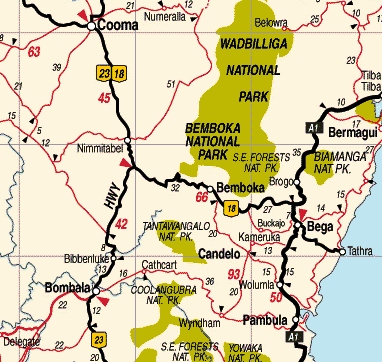
We made an early start next day as it is a steep pull up the pinch on Tantawangala, and arrived at "Aston", Bombala at 4 o'clock. There was a most lovely view of the Snowy Mountains within a couple of miles from Aston as it was a clear bright sunny afternoon in August, but cold enough to have fires. The housekeeper had the house all decorated with ivy and fine green as no flowers coulg be got then on Monaro and big fires were brightly burning in the rooms. It all looked cosy and nice but small and quiet after Kameruka. The first few weeks were very quiet. We passed the time in riding and walking when George was not busy with station matters. After our first appearance in the Church the callers came and then we had to return calls. When we were six weeks married my husband had to go to Cooma on a court case in Quarter Sessions held in Bombala. A Chinaman was found dead in his hut in July on the Station. Father had given him a big cheque the night before and he had been robbed, so murder was suspected. But evidence gave it that he died in a fit and was robbed afterwards. Mr. Gardiner, the NSW Bank Manager, was one of Father's witnesses, and, coming back from Cooma they were caught in a terrific snow storm. They were nearly forzen, but had hot drinks at Nimitybelle and came through to Aston after a terrible journey. After all that nice fine weather and this storm setting in, my poor horse, Price, caught a cold and died. That was my first piece of bad luck. When the weather cleared we decided to have a good turn-out. Woman-like, I wanted to ransack the place and get it into apple-pie order as Father and two other gentlemen had been bachelorising for two years. Father said he would do the same. My sister Katie was staying with me then on her way home to Cooma. She had remained after the wedding in Bega with some friends. I was very busy at 9:30 a.m., turning out a cupboard when the Cook (we had only a married couple) came in and said the Master was calling me. I went to the Store and found him and Bourke very busy. Father thought he had found something Mrs. Lamb must have had for her own use - cornflour or something of the kind, as the Station only had rations, including plums, currants, and a few things for the table. We all tasted this stuff. I knew it was not either arrowroot or cornflour. Father took it in the sun and came back and said he believed it was Arsenic. He, in his absent way, had tasted about 17 grs. whilst all the time cautioning us to be careful. I went back and said jokingly to my sister who was letter-writing in the dining room, "We are all poisoned and you are the only one to tell the tale," little knowing what a tale it would be. I told her what had occurred and went on at the big cupboard when Father came in looking very ill and coughing. I jumped off the chair and ran to him. He said, "I am poisoned." I rushed out and sent Bourke for the doctor. He had a horse saddled at the gate and set off. From Aston to Bombala is six miles. Then I ran to my sister and we got a book that had been given me by one of the Kameruka maids called "Consult Me for all you want to know". We found "poisoning" and it said Arsenic was the worst of all poisons and that one should send at once for a medical man. It gave not a bit of help. Very miserable, I commenced to administer an emetic of mustard and water, etc. Bourke arrived in town and found the doctor had gone three miles out. The Chemist sent out by Bourke's nephew some powders to to on with, but they were all no good. Father was terribly ill and in agony. The doctor arrived about 11:30 and stayed a long time before he could produce vomiting. He came again in the afternoon and again at 9 p.m. We had a hard time. Father pulled through the night but of course for a few days his life was very uncertain and for weeks he was very ill. In fact he never again got strong. 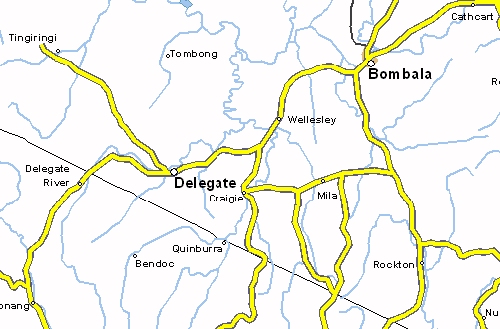
Craigie - Detail He got ill and gave up the Station and bought a small place at Craigie and called it "Finchley" after his Father's house in England. There he dairied and did a little farming and horsebreeding. One pure white cow we had gave us 21 quarts of milk for the first month she was in and then for a long time 18 quarts. We had some very nice sheep too. Finchley was twenty-two miles from Bombala on the Little Bog. Sometimes Father used to shoot wild pigs. One day some came quite close to the house, feeding on the bog. Father took his rifle and shot a big boar. The boar ran a little and then turned and was coming straight at Father, but only went a few yards when he fell dead. You could see it all. I called out but you thought it must be fun and clapped your hands. Nell was a toddler; I forget if Bess was there. Father went to Bombala. The heat was great and he got a stroke of the sun. He was ill in town but went to Aston and got worse. Mr. Beuzeville was then managing and as he was a great friend of ours, he sent for the doctor. The next day Willie Stone drove Father home, I could not think what was the matter with Father comin in looking so ill. Then he got worse and we had to send for the doctor. He said Father had congestion of the liver. The doctor's fees were fifteen guineas a visit and Father was ill for three months. Katie was born on Palm Sunday. Father was so ill that we thought he would not live through the day. Uncle Fred was there. When Katie was nine months old and Father was better, we found ourselves very short of money. The bill for the Hotel was over 9 pounds as Father had to live almost on Champagne and Whisky for weeks. He was not able to do anything so we mortgaged Finchley, then sold out and I started a Private Boarding House in Bega, going as I thought, among old friends. (It is not always wise to go back to old friends to earn a living.) Father got well enough to drive himself about, so he started an agency for A.J. Asken & Co., a firm in Sydney. He supplied all store goods in general from a collar to shears, travelling through Monaro and Bega district. Then he also took up wine & spirit & tea agencies and did fairly well, but was often laid up. The boarding house just kept us going. We were in Bega about four years. Len and Dora were born there. Then Father and Mr. G. Rodd became partners as brokers, etc. in Pambula when the gold diggings started. They did very well for the first three months, so Father got me to give up the boarding house and go to Pambula to live as he wasted so much time going up on Saturday and returning on Sunday or Monday. Saturday and Monday were two of the busiest days. So we rented a small place at Green Point, a part of Mr. Woollard's farm, Mr. Woollard keeping his vineyard and orchard, for he used to make wine.  The day I arrived with the waggon of furniture and family, Father came home very ill and we had to put up a bed as soon as possible. He was ill for one month and then the Christmas holidays began. When work started on the mines, Father and Mr. Rodd went into business. There were several new brokers and business was very slow. Green Point is a lovely spot but a very barren place. One great beauty was the Merimbula Lake which had fish in quantity. We used always to spend all the fine Sundays on the Lake and found it better for the children who enjoyed the quiet and beauty better than being in the house. Well, Father got so ill there and got worse and worse. I think you know the rest. George Whiting Crommelin died 7 May 1905. His wife survived him by many years and died
22 July 1940 aged 84 years, 8 months. Their family was:
Source: (Prepared for publication by E.J. Lea-Scarlett in "Descent" genealogical journal).
|

