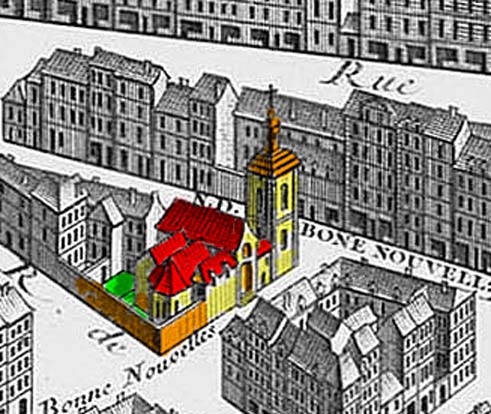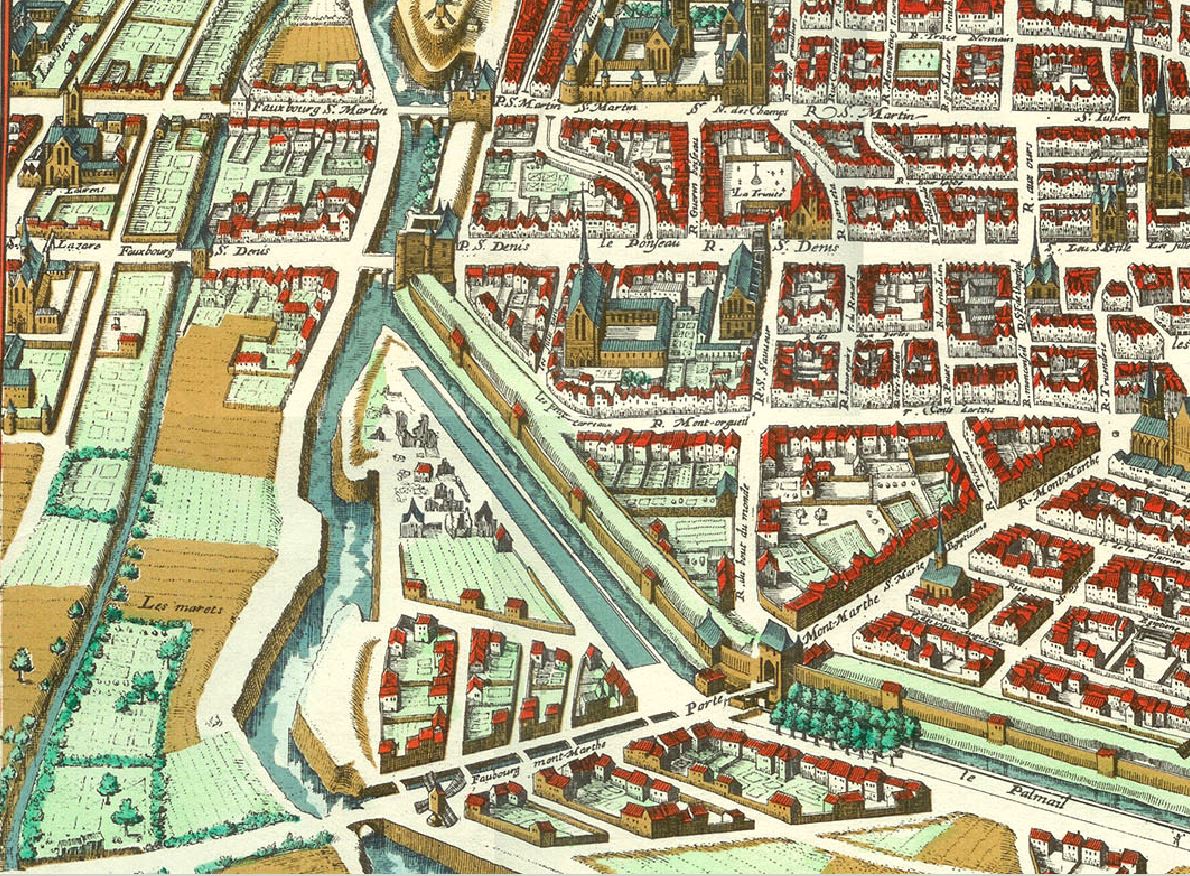
In 1615 the area (before La Voisin lived there) would have looked like this. (Merian Map)
Part 5: The House of 'La Voisin': Rue Beauregard
Catherine Deshayes (a.k.a. 'La Voisin'), wife of Antoine Montvoisin, was the occultic high priestess at the center of the 'Affair of the Poisons' scandal. At her home in a seedy part of Paris she plied her trade of consultations, black masses, and dissemination of poisons and love potions. It might be of interest to see where this nefarious enterprise took place a long time ago...


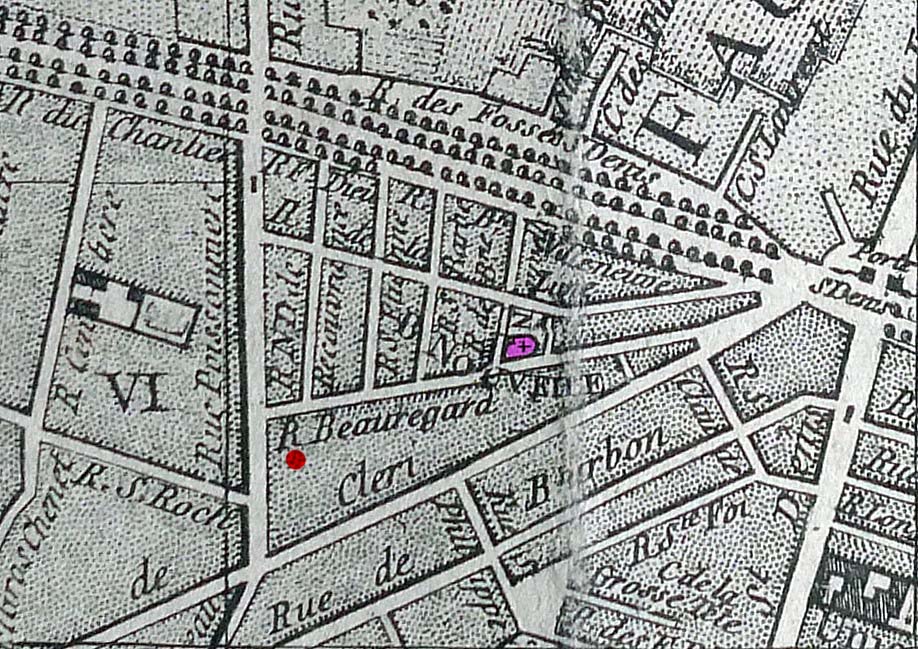
In 1760 it looked like this. (Plan de Vaugondy)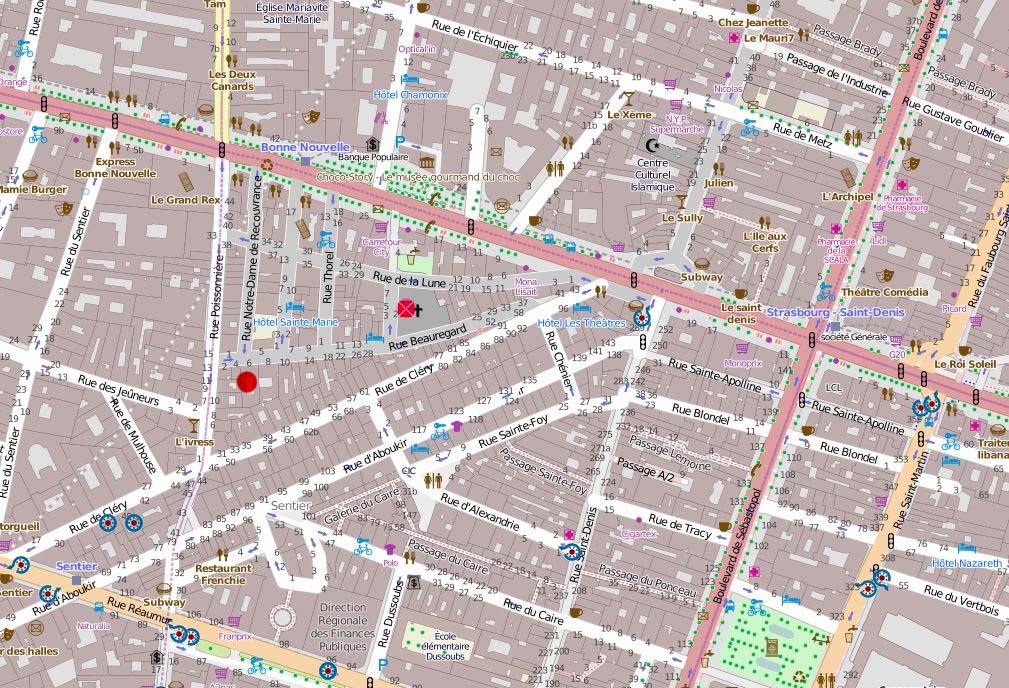
The area today. The adjacent street, rue Poissoniere, means '(female) fish-monger'.
However, simply dropping one 's' in the name would spell 'rue Poisoniere' which means
'(female) poisoner' which would seem rather à propos.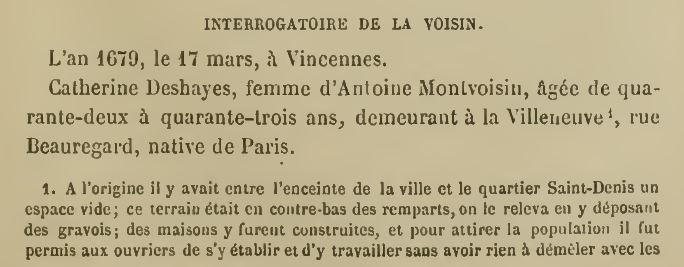
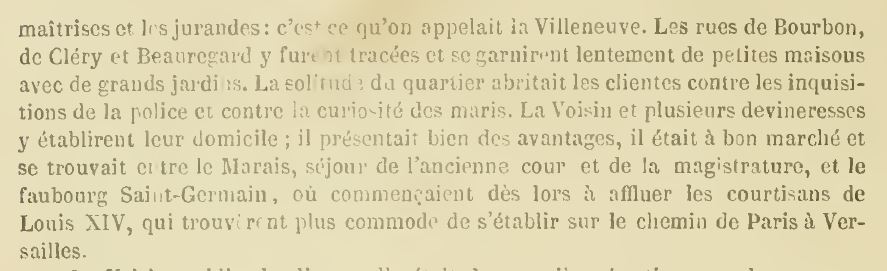
Source: Bastille Archives, Vol.5 P.257-8.Translation:
1679-03-17 Interrogation of La Voisin at Vincennes.
Catherine Deshayes (aka 'La Voisin'), wife of Antoine Montvoisin, age 42 or 43, living at Villeneuve, rue Beauregard, native of Paris.Originally there was between the enclosure of the city and the Saint-Denis neighborhood an empty space. This terrain ran down towards the ramparts. It was used to bury the rubble when the ramparts were torn down. Houses were built upon it, and to attract a population permission was granted for workers to settle and work there, having nothing to do with masters and guilds. This district was called 'Villeneuve'. The streets called Bourbon, Cléry and Beauregard drew people and slowly it grew with the addition of small houses with large gardens. The solitude of the neighborhood sheltered clients against inquisitive police and against the curiosity of husbands.
La Voisin and several fortune-tellers established their residences there since it provided some good benefits. It was cheap and was located between Marais, the location of the former court and judiciary, and Faubourg Saint-Germain, which soon began to flow with courtesans of Louis XIV, who found it more convenient to settle somewhere along the road between Paris and Versailles.
'Notre Dame de Bonne Nouvelle' on Rue Beauregard
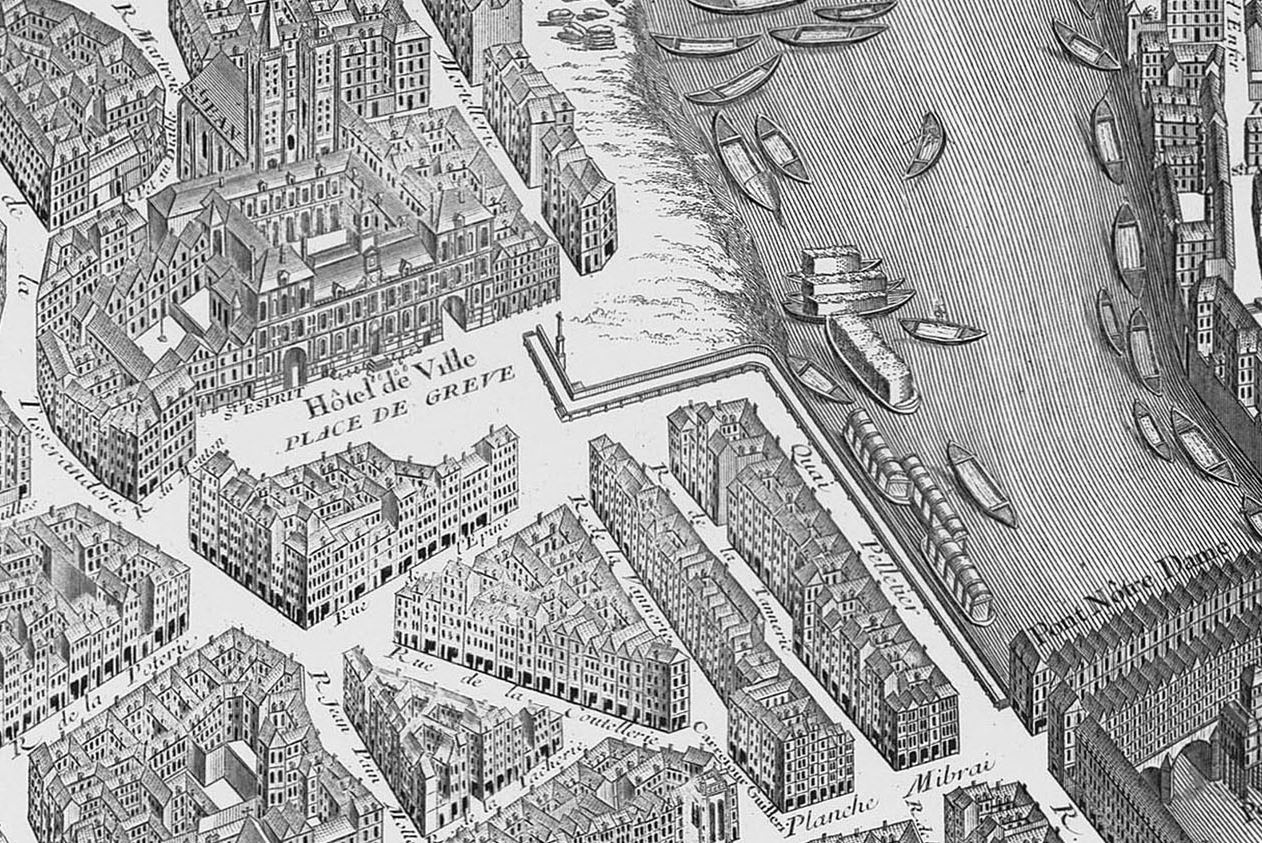
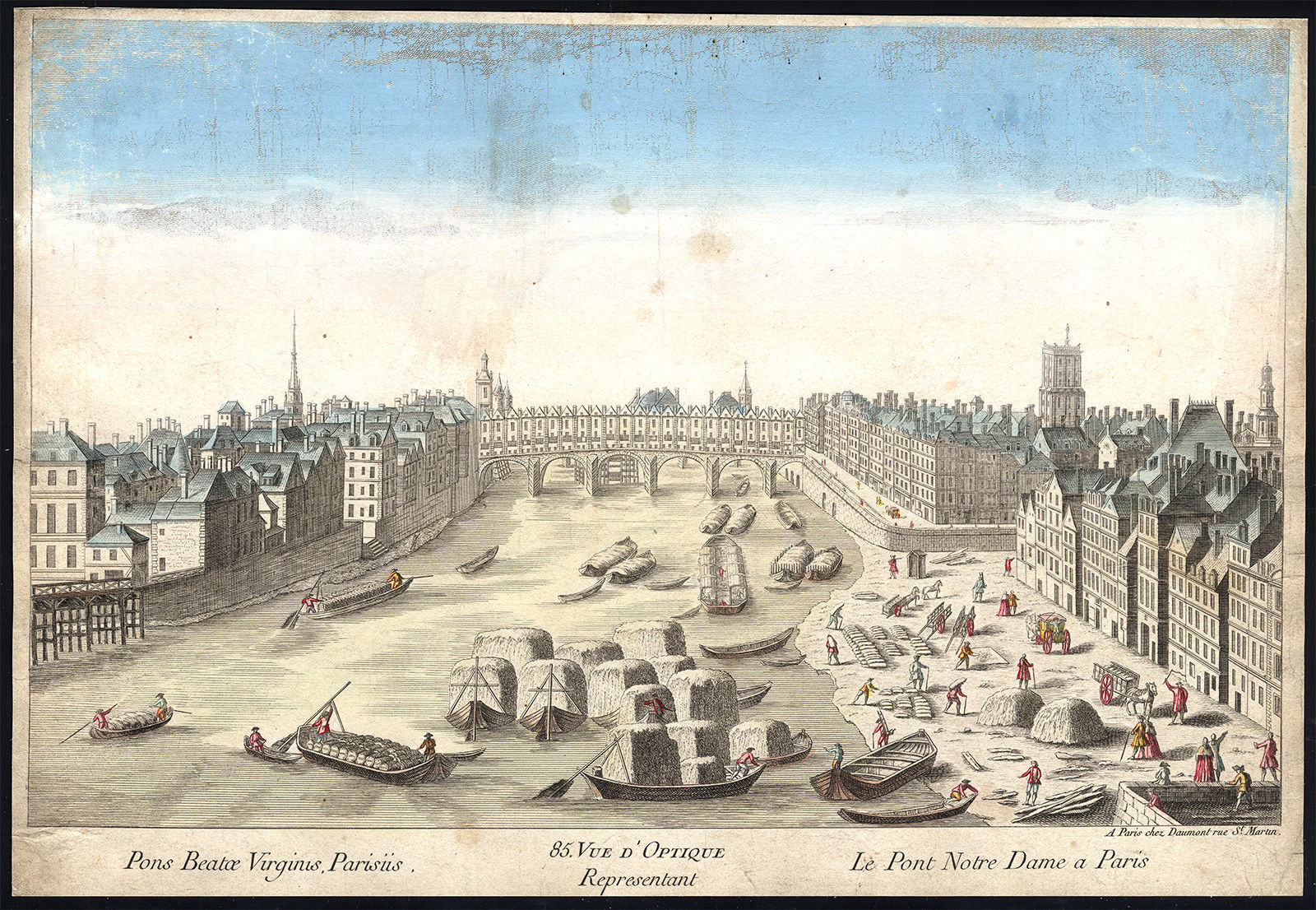
Father Gilles Davot, priest at Notre-Dame de Bonne-Nouvelle and other places, native of Argentan in Normandy, age 42, made his honorable amends before Notre Dame, then was taken to Place de Grève where he was hanged, then burned, on Wednesday, 9 July 1681. He was the confessor of La Voisin and Guillaume. Guillaume, a lover of La Voisin, was also the hangman and chief executioner of Paris who didn't want to hang Father Davot because he was his confessor. Therefore he had his valet, who had been his pupil, do the job (Bastille Archives Vol.6 P.406). Gilles Davot was one of several R.C. priests who were arrested for officiating at La Voisin's black masses in which infant and child sacrifices took place. The most notorious priest involved in the Affair of the Poisons was Etienne Guibourg, sacristan of the Saint-Marcel church at Saint-Denis.
Part 1: The Family
Part 2: The Affair
Part 3: The Secret
Part 4: The Street
Part 5: 'La Voisin'